Stargazing on Colorado\'s Eastern Plains
Hugo sits in one of Colorado\'s darkest sky corridors. Here\'s why the Eastern Plains offer some of the best stargazing in the state — and how to make the most of it.

When most people think of Colorado stargazing, they picture mountain observatories or high-altitude campgrounds. But there's a secret that astronomers and night-sky enthusiasts have known for years: the Eastern Plains of Colorado offer some of the darkest, clearest skies in the entire state.
Hugo sits right in the heart of this dark sky corridor — and if you've never stepped outside on a clear night here and looked up, you're in for something that will genuinely stop you in your tracks.
Why the Eastern Plains Are a Stargazer's Dream
The Eastern Plains have a few things going for them that the mountains simply can't match:
Flat, unobstructed horizons. Unlike mountain stargazing where peaks cut off large portions of the sky, the plains give you a full 360-degree view from horizon to horizon. You can watch the Milky Way arc completely overhead, from one edge of the sky to the other.
Low light pollution. Lincoln County has a very small population spread across a large area. There are no major cities nearby — Denver is 120 miles west, and the next significant light dome to the east is in Kansas. On a moonless night, the sky above Hugo is genuinely dark.
Low humidity and high altitude. At roughly 5,050 feet elevation, Hugo sits high enough to reduce atmospheric interference, and the dry Eastern Plains air means fewer clouds and less moisture to scatter light.
Stable seeing conditions. The flat terrain means less atmospheric turbulence than you'd find near mountain ranges, which translates to steadier, sharper views through a telescope.
What You Can See from Hugo
On a clear, moonless night from Hugo or the surrounding countryside, expect to see:
- The Milky Way — Not just a faint smudge, but a full, dense band of stars stretching across the sky with visible structure and dark lanes
- Thousands of stars — The naked-eye star count in truly dark skies can exceed 2,500 visible stars, compared to fewer than 100 in a typical suburban area
- Planets — Venus, Mars, Jupiter, and Saturn are all easily visible to the naked eye when they're up, and stunning through even a small telescope
- Meteor showers — The Perseids (August), Leonids (November), and Geminids (December) are spectacular from dark-sky locations
- Nebulae and star clusters — With binoculars, you can spot the Andromeda Galaxy, the Pleiades, and the Orion Nebula with ease
Best Times and Conditions for Stargazing Near Hugo
Moon phase matters most. The best stargazing happens in the days around new moon, when the moon is below the horizon for most of the night. A full moon washes out faint objects, so plan accordingly.
Summer and fall are prime seasons. The Milky Way's galactic core is best positioned in the summer sky (June through September), making those months especially rewarding. Fall brings excellent transparency and the Andromeda Galaxy high overhead.
Get away from town lights. Hugo itself is very dark, but driving just 5–10 miles out on any county road takes you to truly pristine skies. Head south on CO-94 or east on US-40 and pull off on any quiet county road.
Dress for the temperature drop. Even in summer, Eastern Plains nights can get surprisingly cool once the sun goes down. Bring a jacket, a blanket, and a reclining camp chair for the best experience.
Nearby Dark Sky Resources
The Eastern Plains are part of a broader dark sky region that includes:
- Comanche National Grassland (south of La Junta, ~90 miles south of Hugo): One of Colorado's premier dark sky locations, with minimal development and vast open skies
- Bonny Lake State Park area (near Burlington, ~60 miles east): The reservoir area offers excellent flat-horizon stargazing
- Pawnee National Grassland (northeast Colorado, ~100 miles north): Another outstanding dark sky destination on the plains
Stargazing Tips for Beginners
If you're new to stargazing, here's how to make the most of your Eastern Plains night sky experience:
- Let your eyes adjust. It takes 20–30 minutes for your eyes to fully dark-adapt. Avoid looking at your phone screen during this time (or use a red-light flashlight app).
- Download a star chart app. SkySafari, Stellarium, and Star Walk are all excellent free options for identifying what you're seeing.
- Start with the obvious. Find the Big Dipper, use it to locate Polaris (the North Star), and work outward from there.
- Bring binoculars. Even a basic pair of 7x50 or 10x50 binoculars transforms the experience, revealing star clusters and nebulae invisible to the naked eye.
Stay at Hugo Inn for Your Stargazing Trip
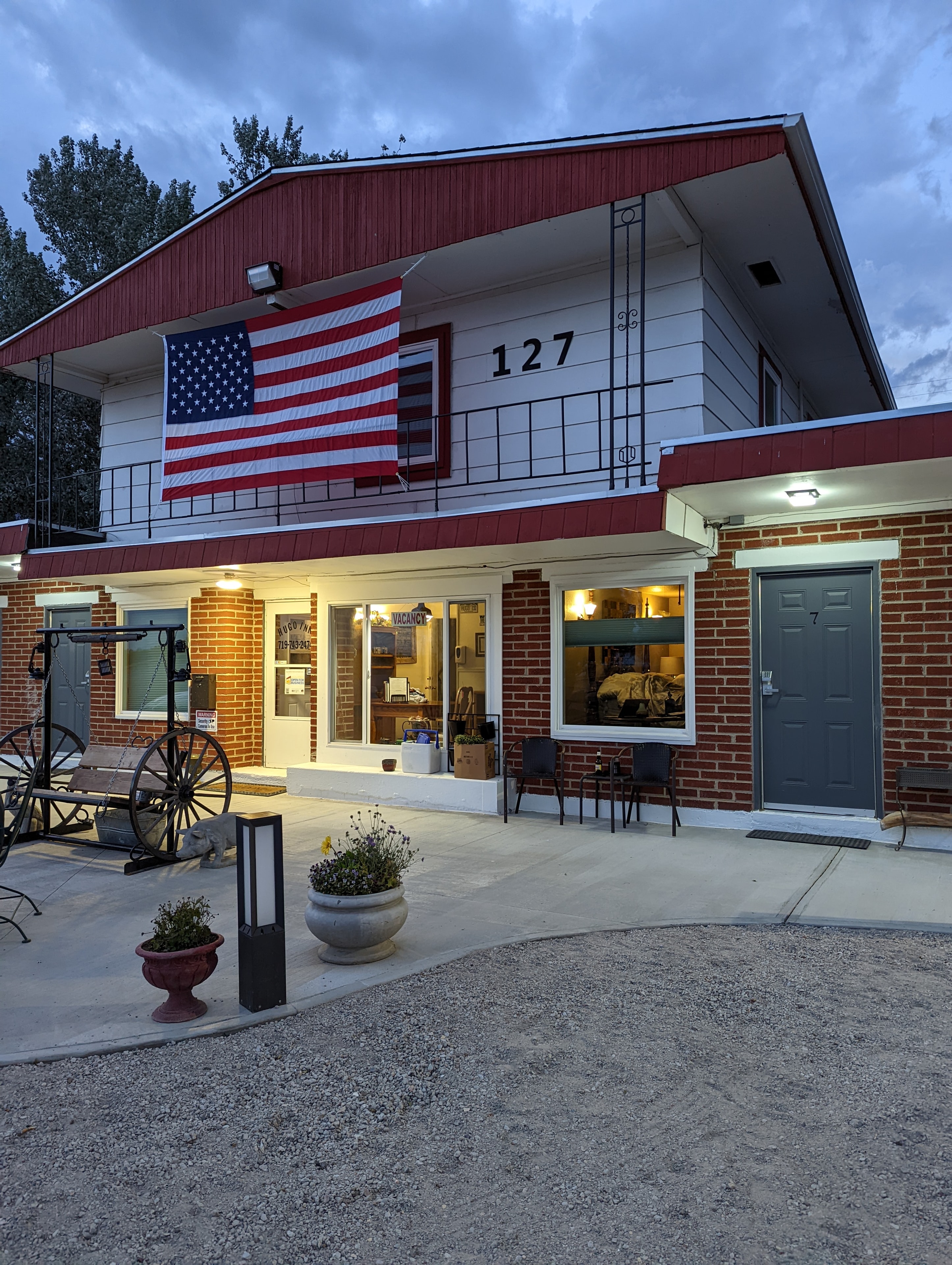
Hugo Inn is the perfect base for an Eastern Plains stargazing adventure. Our location puts you right in the heart of Lincoln County's dark sky corridor, with easy access to the surrounding countryside.
After a night under the stars, there's nothing better than a comfortable bed waiting for you. Book your stay at 719-743-2474 or through our online reservation form.
Explore Topics
Written by
Hugo Inn
Content creator and writer sharing insights and stories.